Regression (回归)
Output is scalar.

Application
- Forecast
- Self-driving Car:
f(camera_view) = angle of wheel - Recommendation:
f(user, product) = probability - etc
Steps
- Model
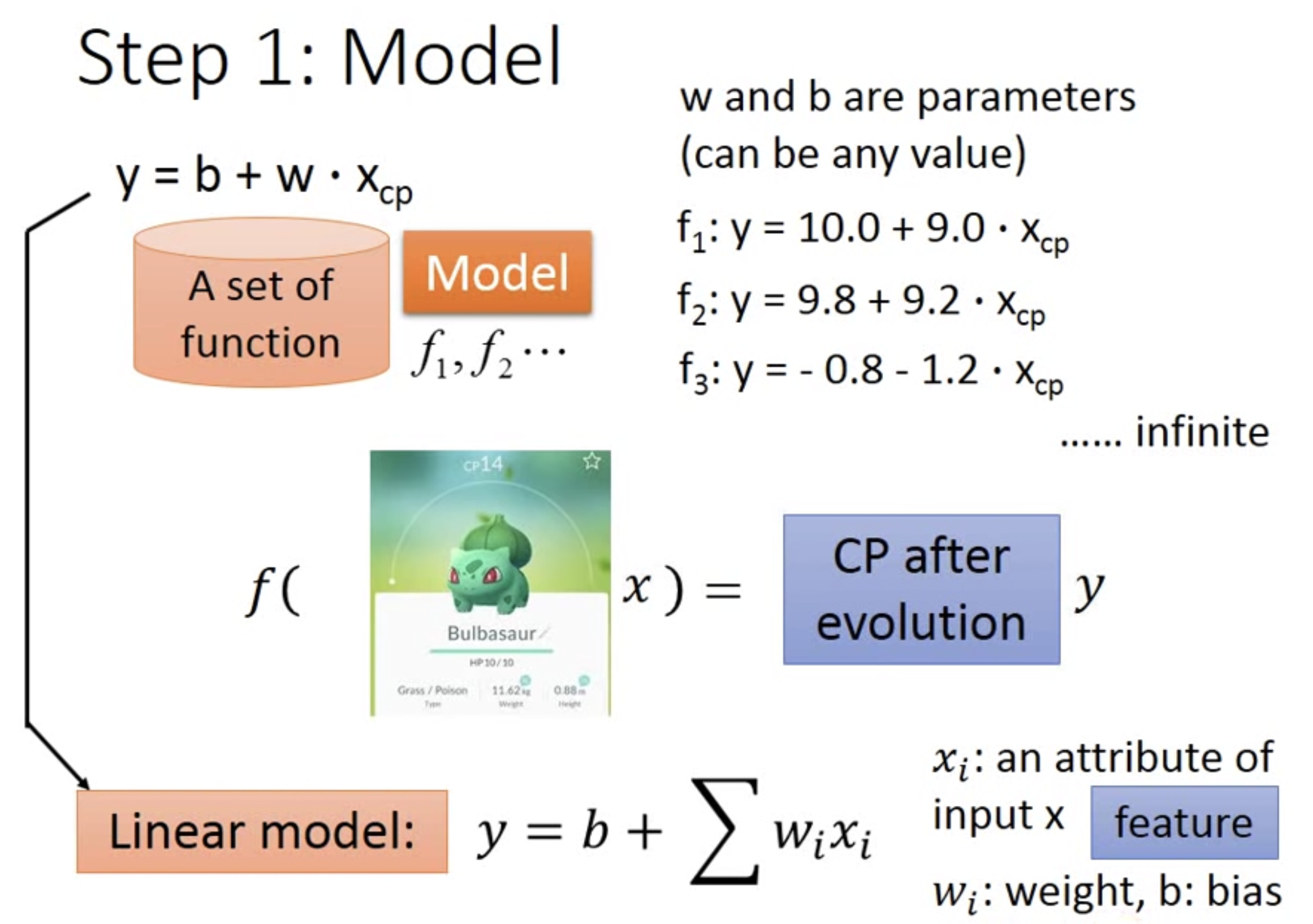
- Goodness of Function


- Best Function
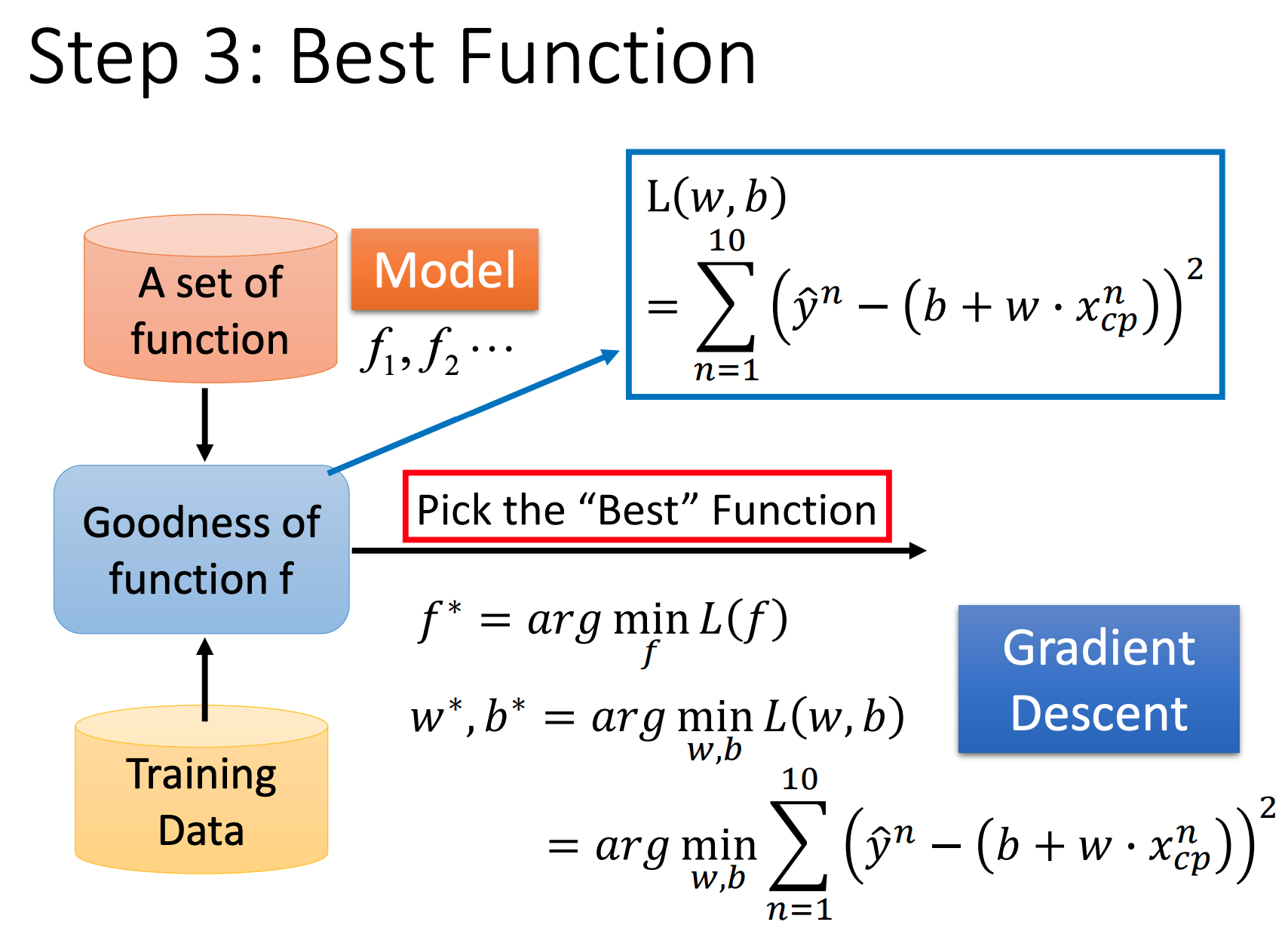
- Gradient Descent
This can be solved by closed form solution: 最小二乘法 Least Square Method
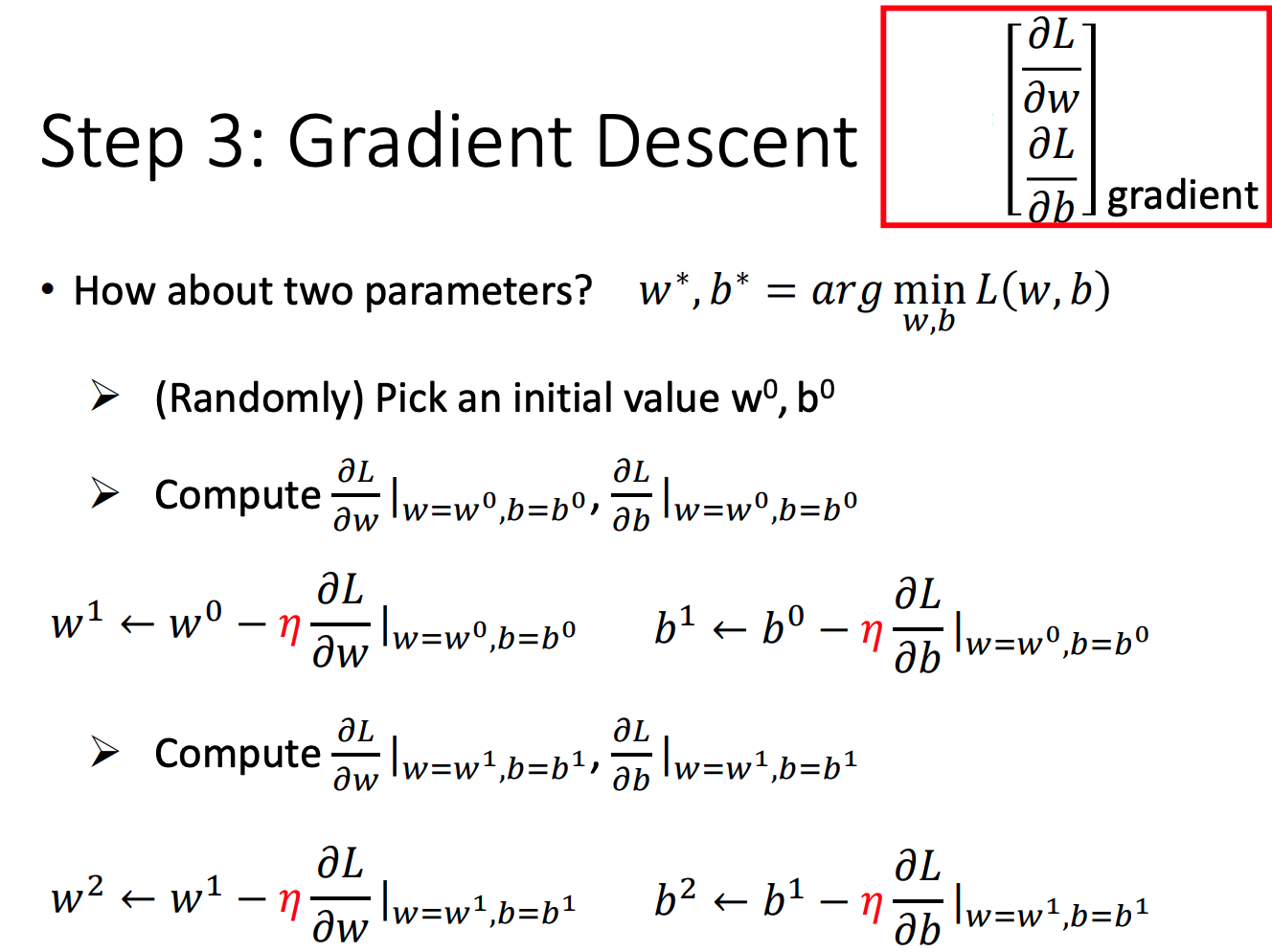
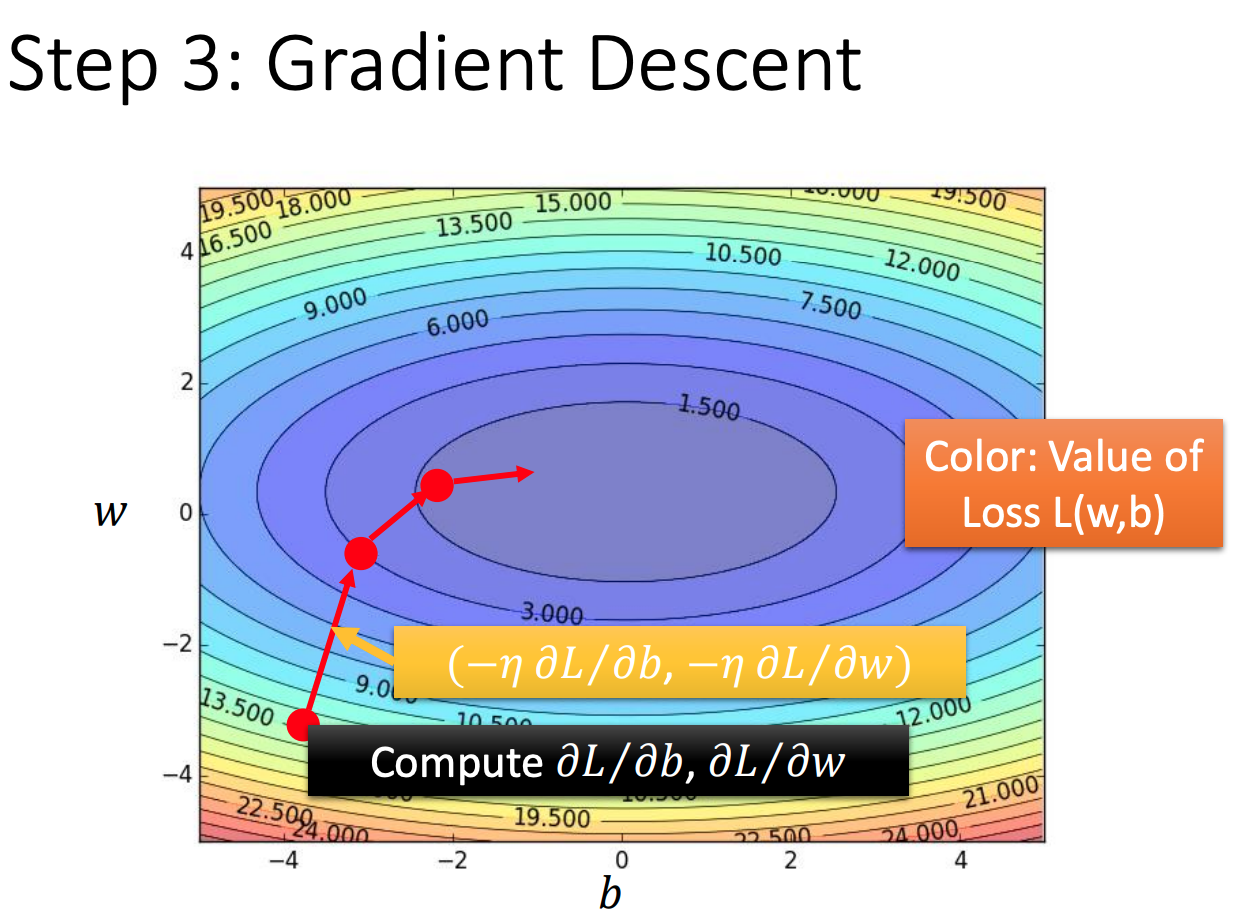
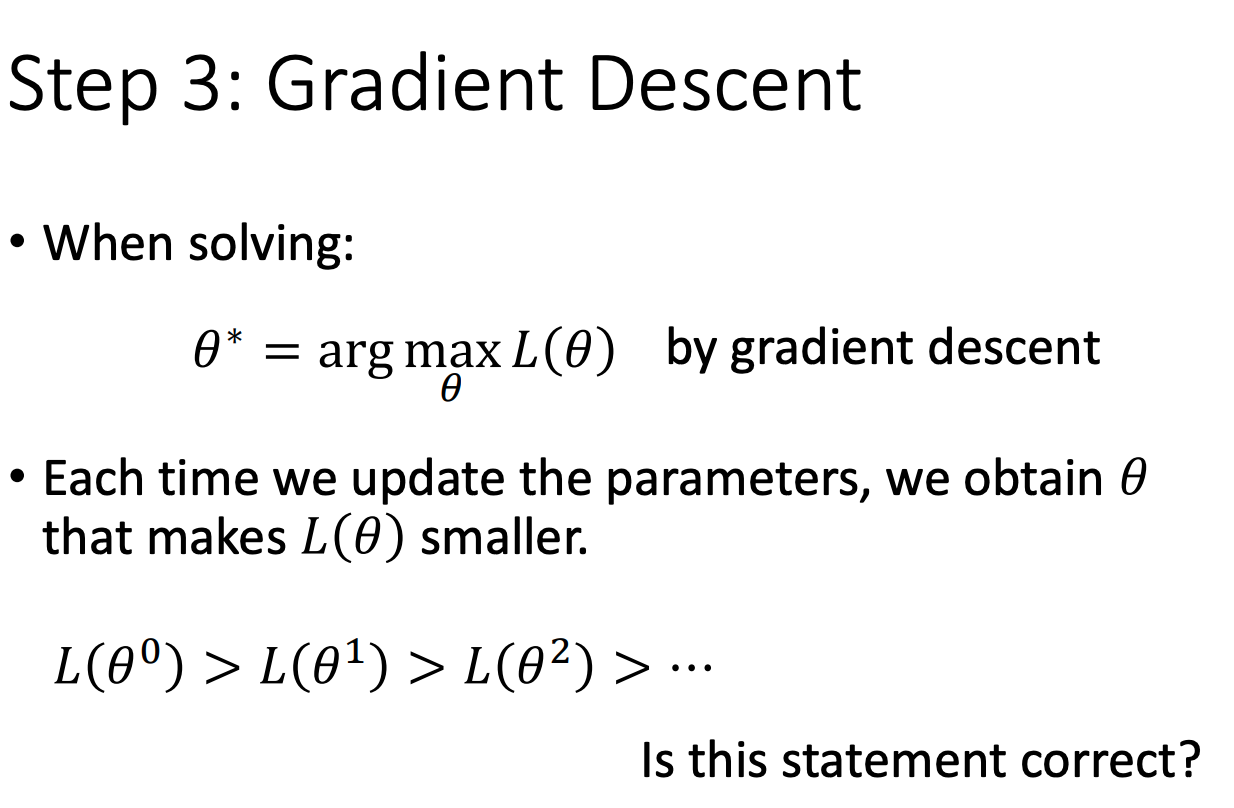
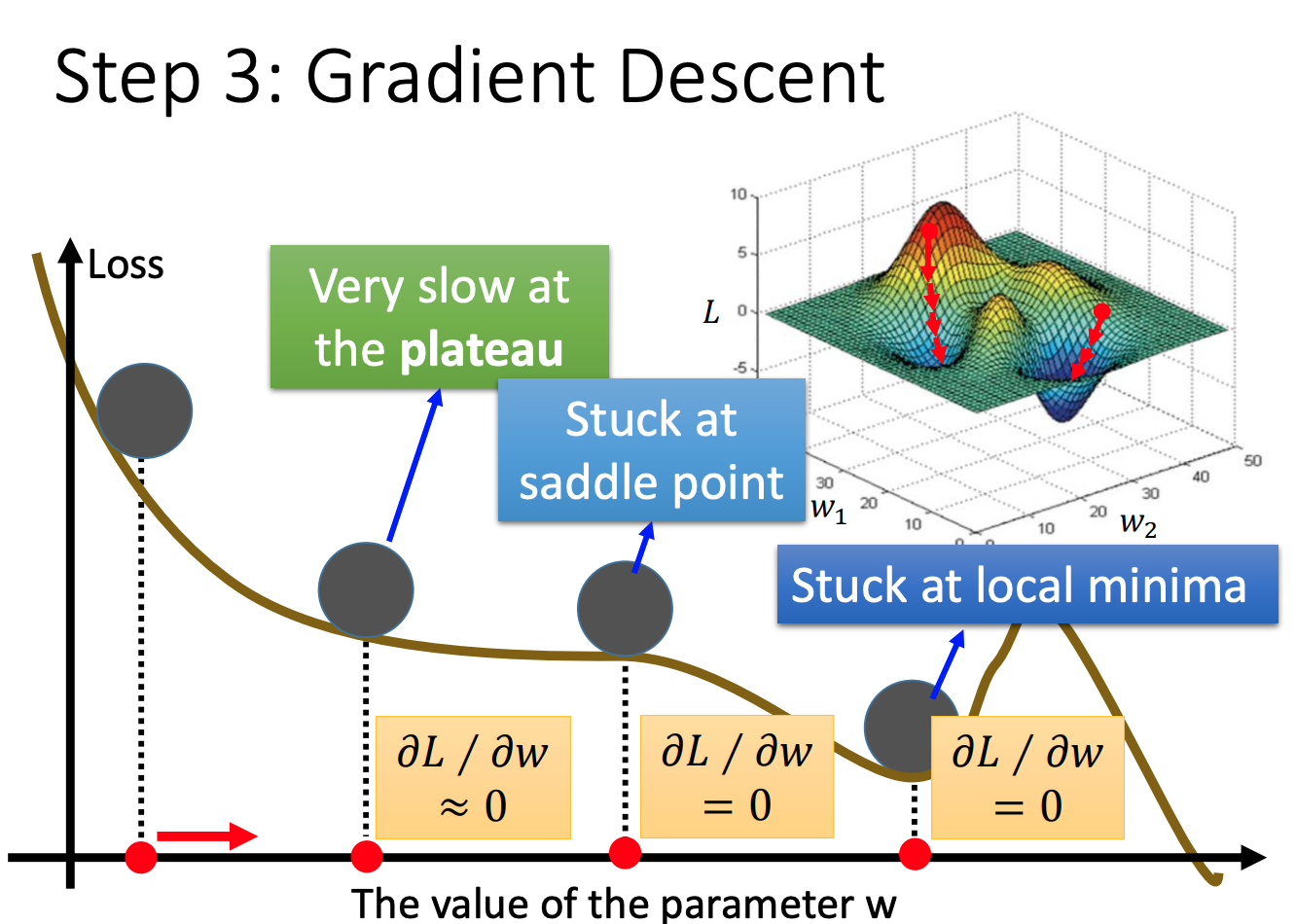
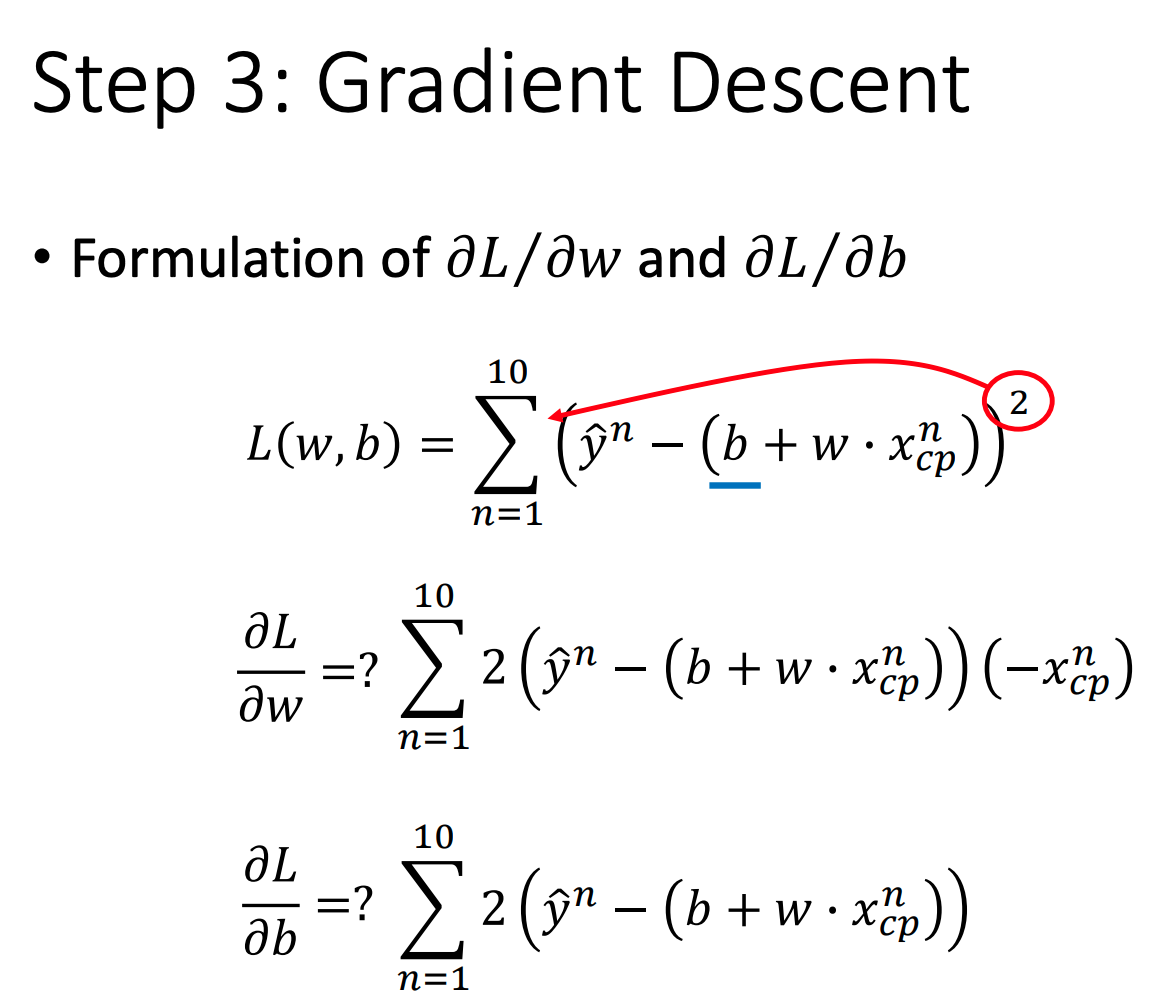
Gradient Descent / 梯度下降
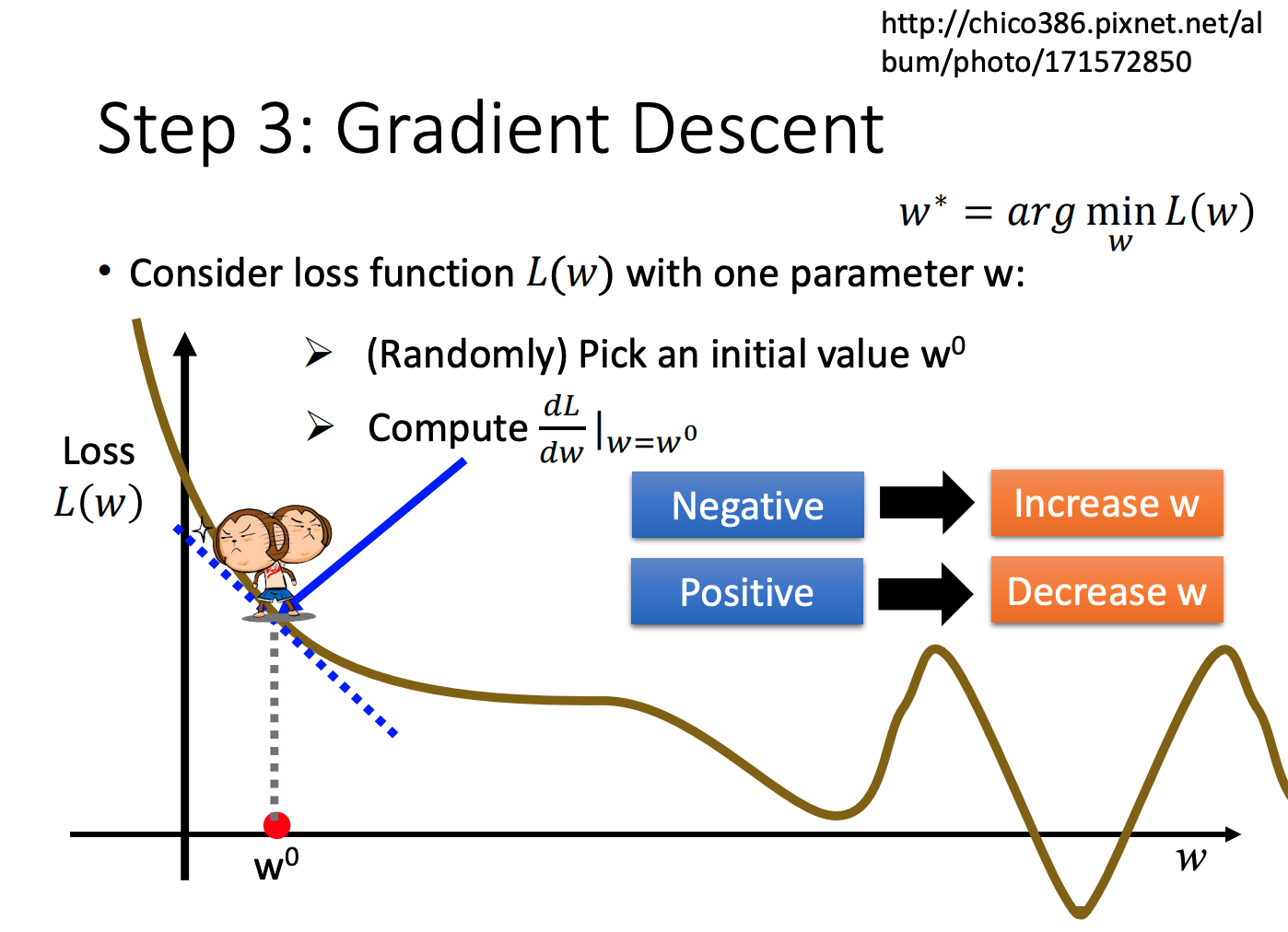

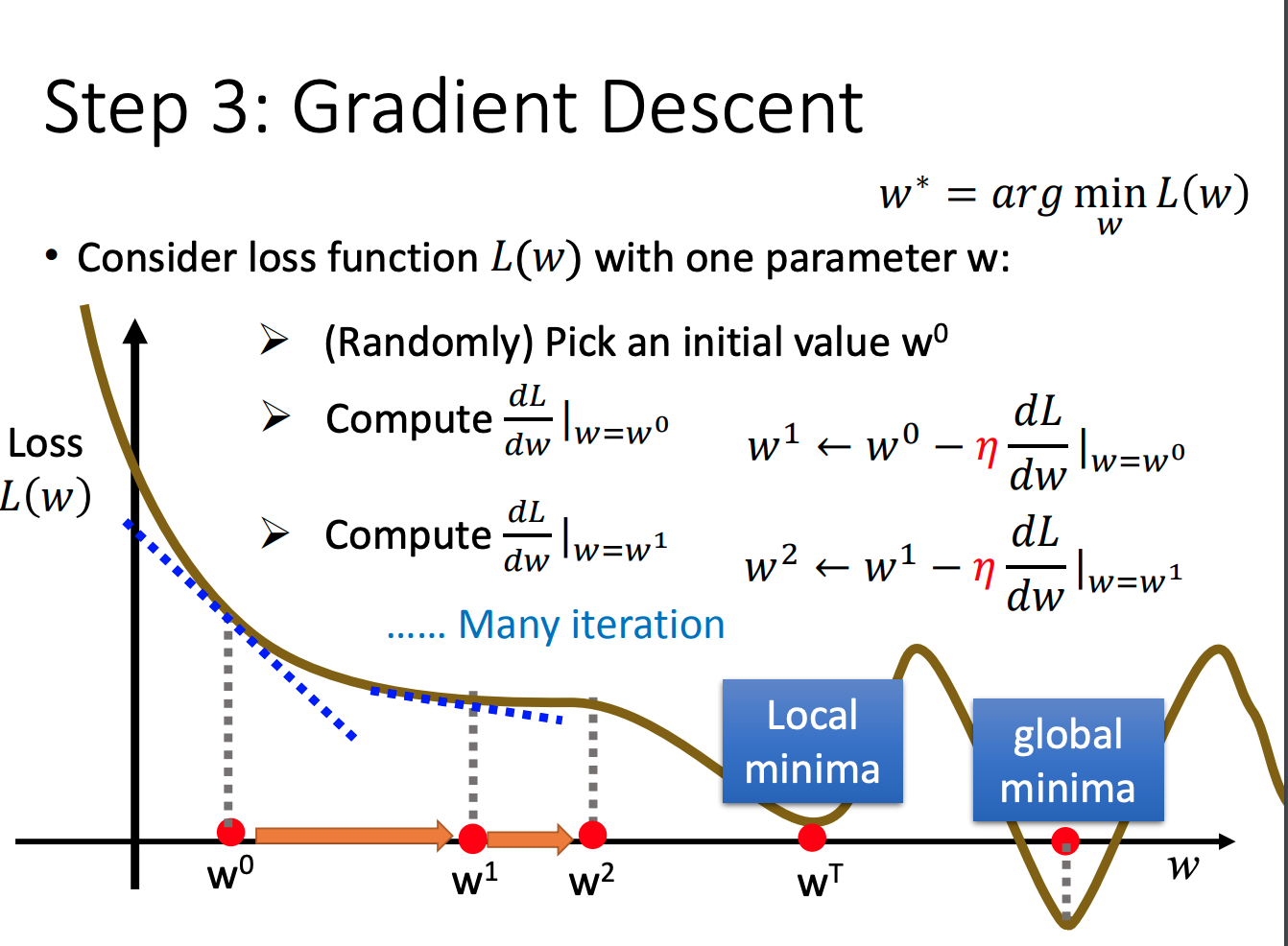 The right upper is nabla (gradient): 向量微分,梯度算符,Nabla算子

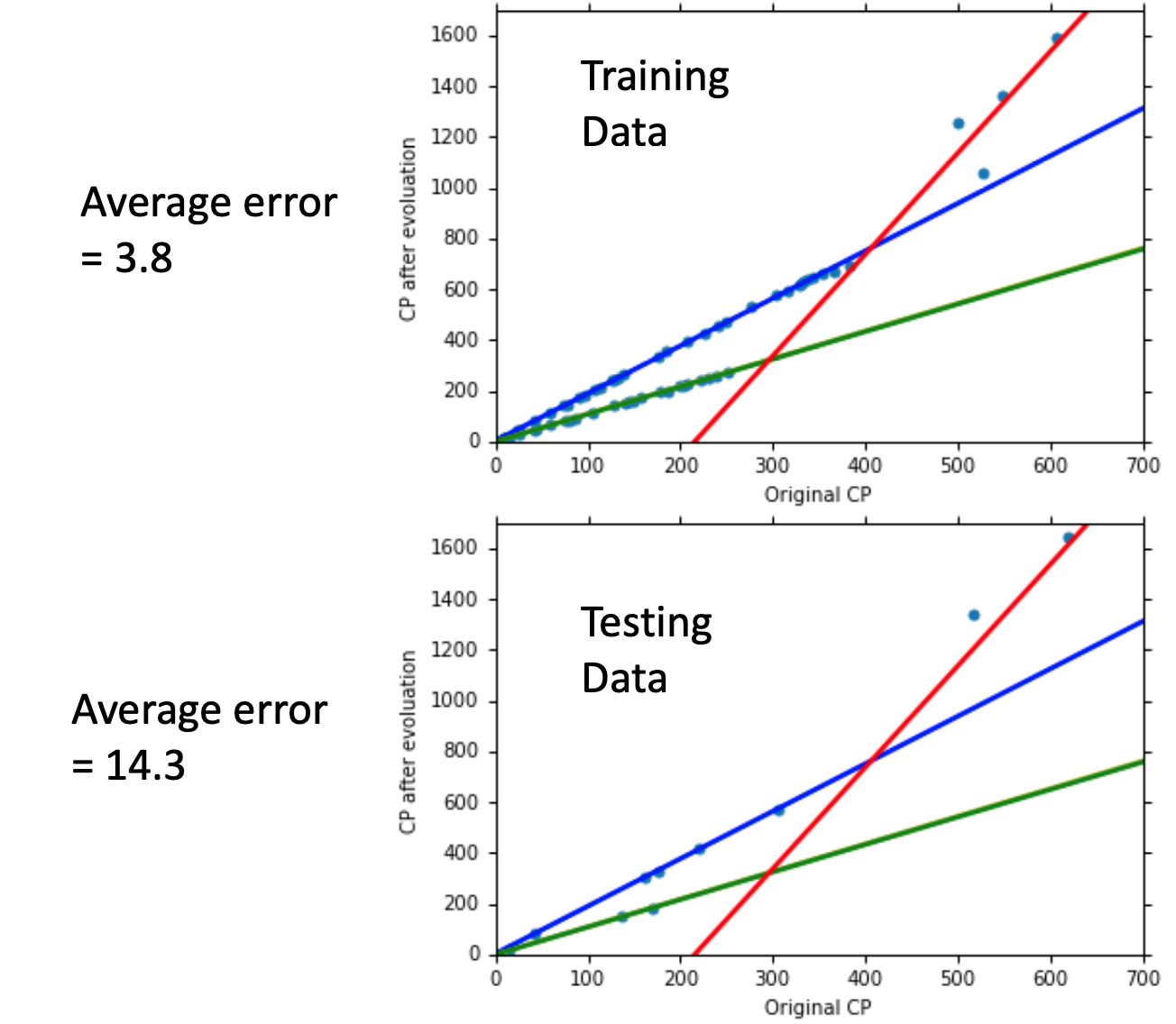
Evaluation / Generalization


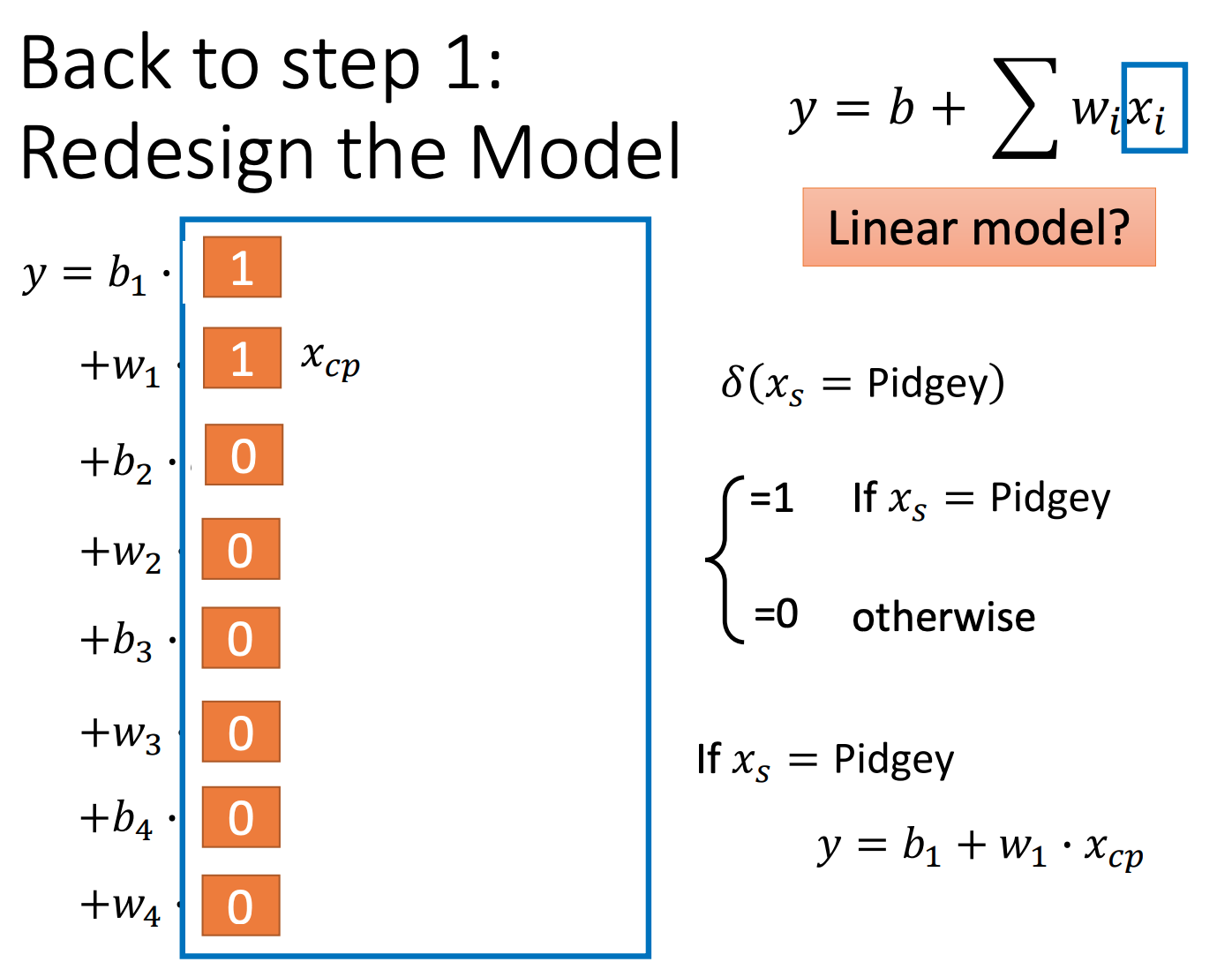
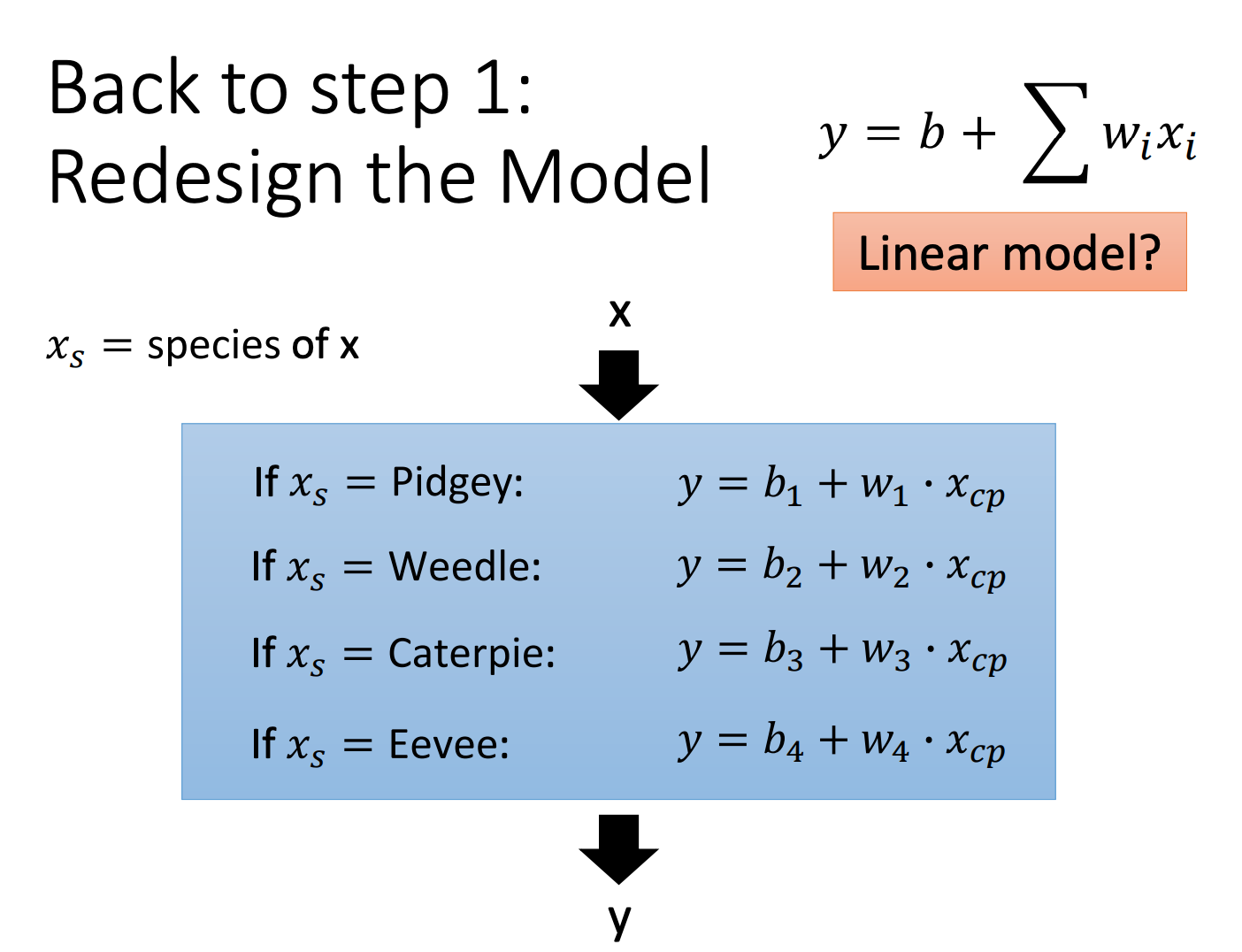 脉冲函数: when equals to .
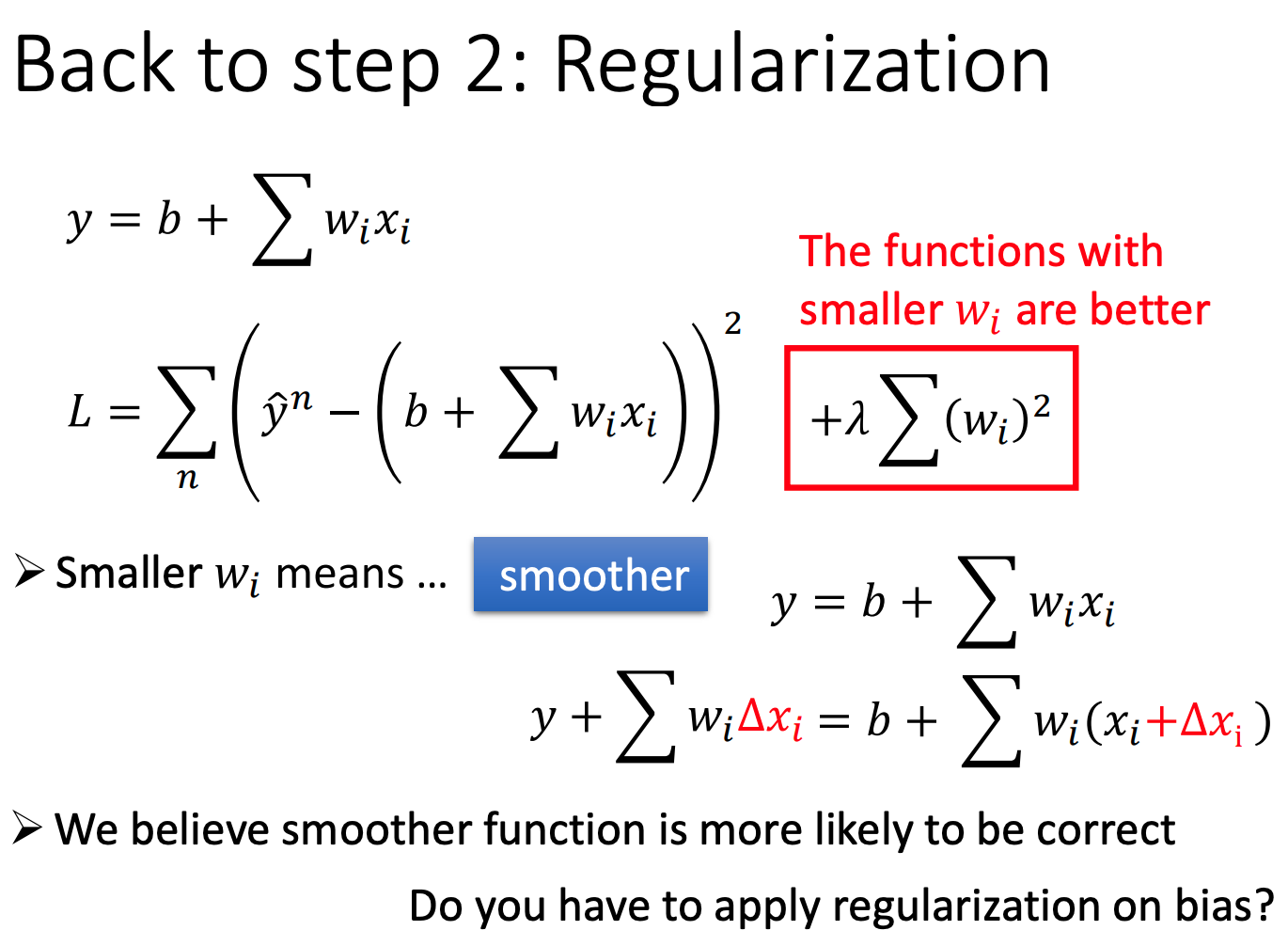

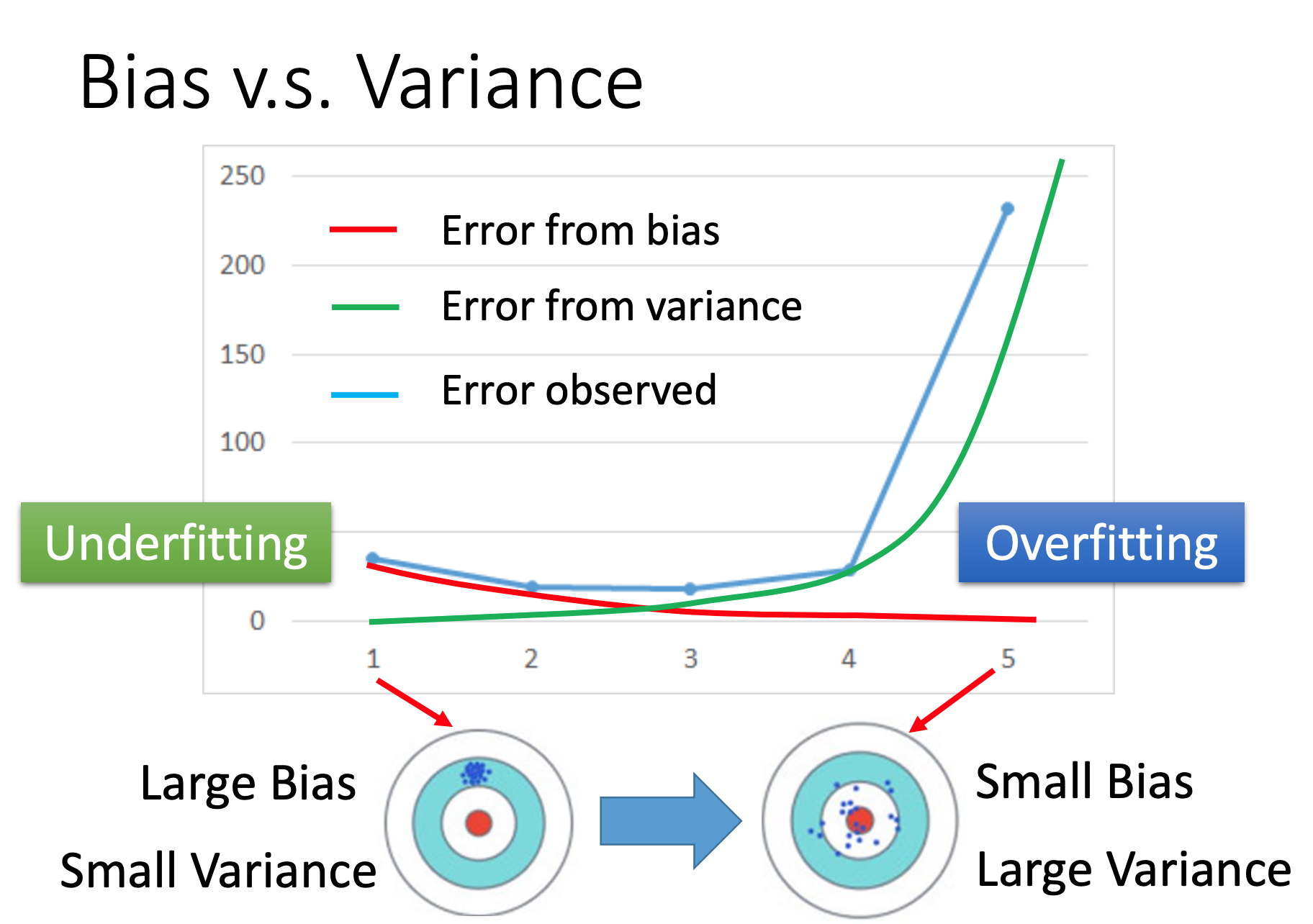
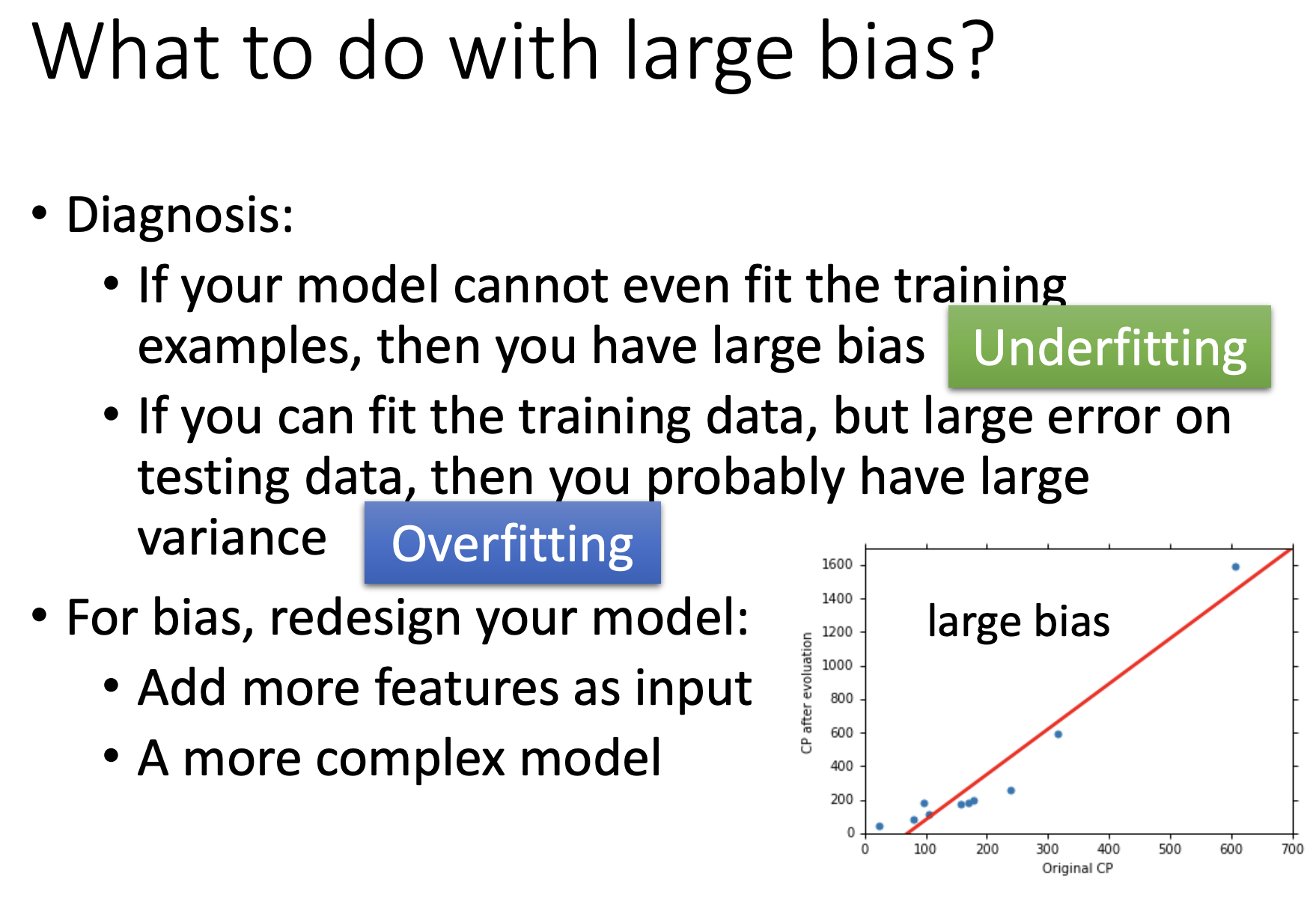
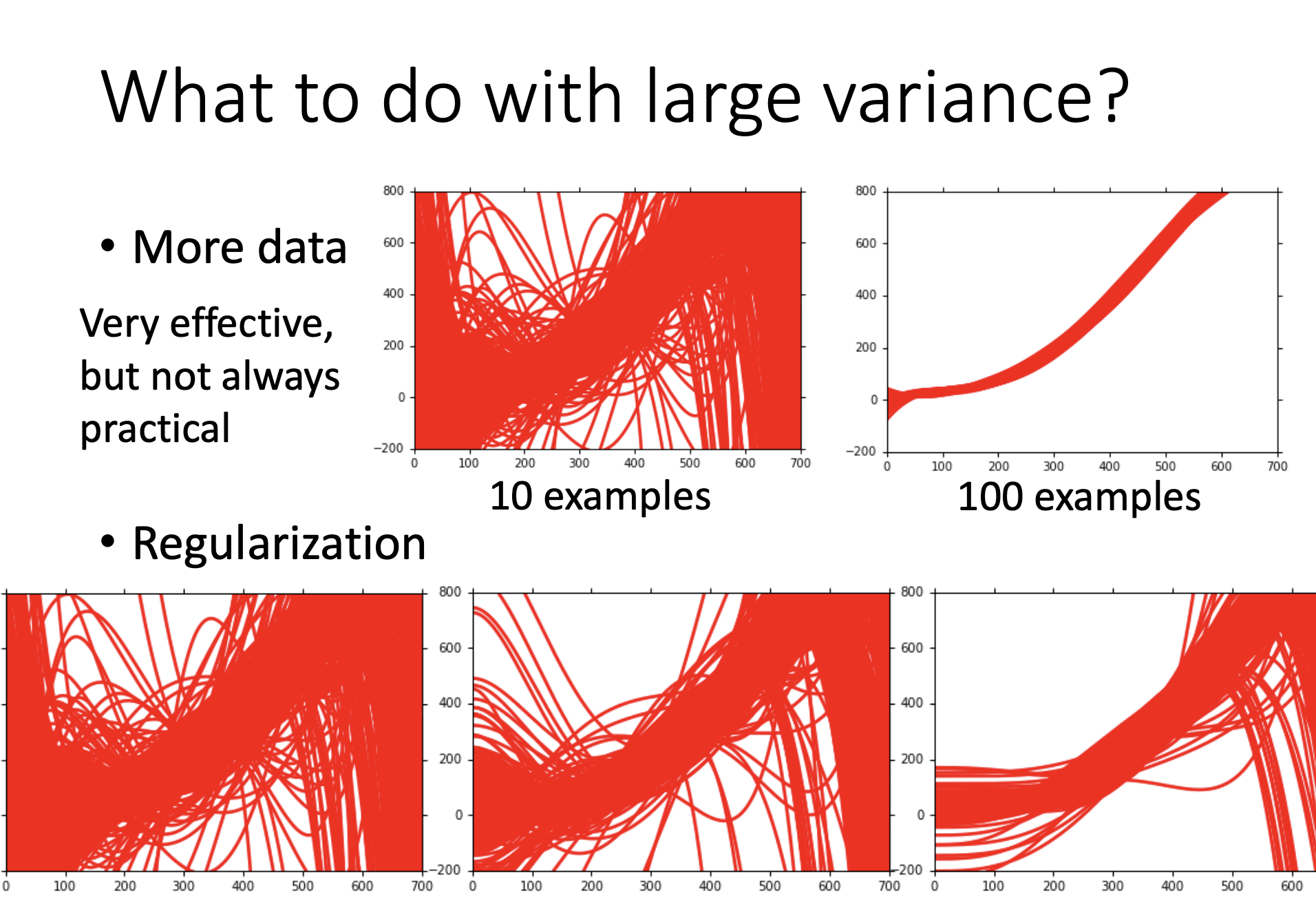
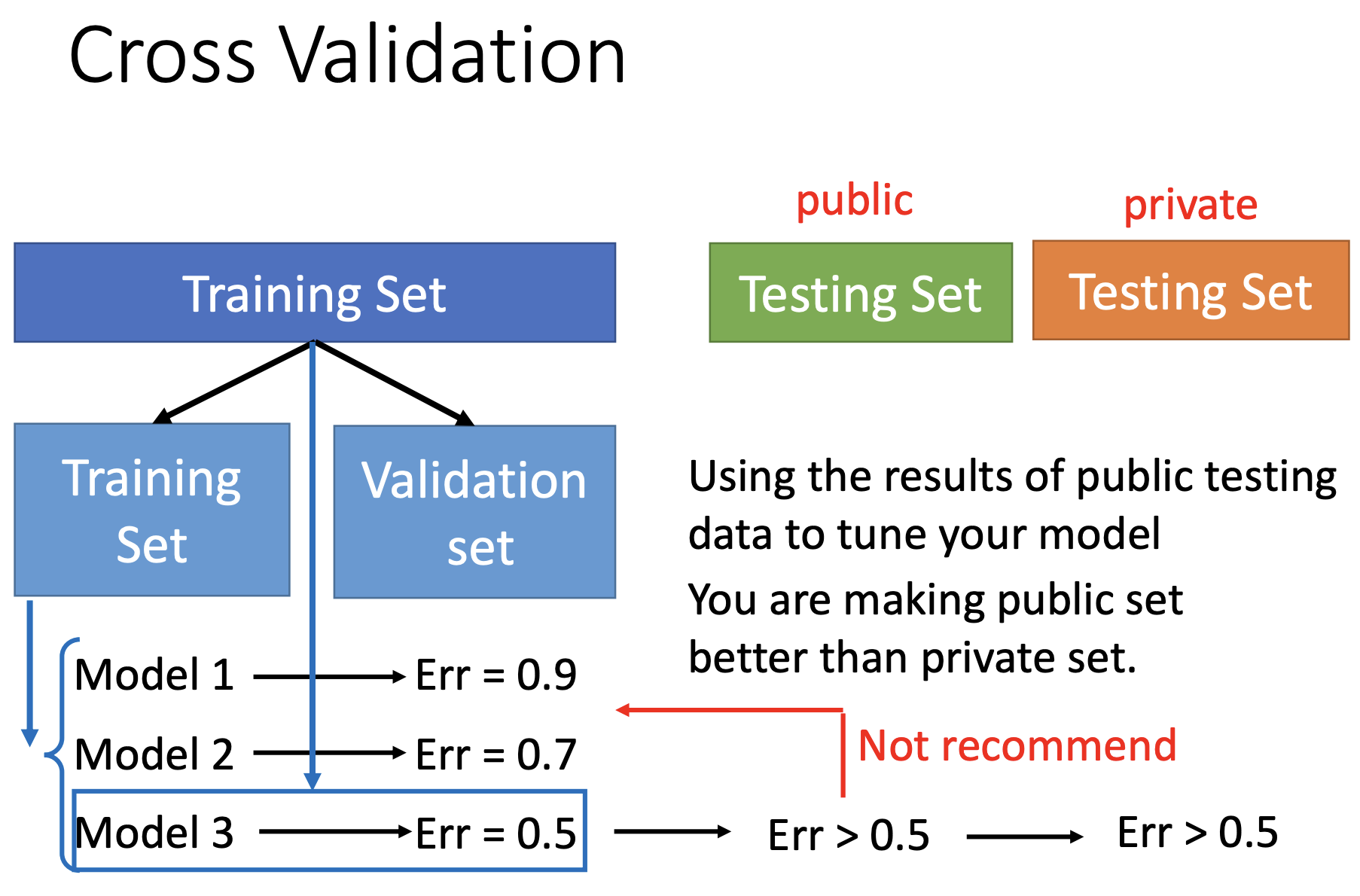
Diagnosis
Central Limit Theorem (CLT / 中线极限定理): 在适当的条件下,大量相互独立随机变量的均值经适当标准化后依分布收敛于标准正态分布。这组定理是数理统计学和误差分析的理论基础,指出了大量随机变量之和近似服从正态分布的条件。
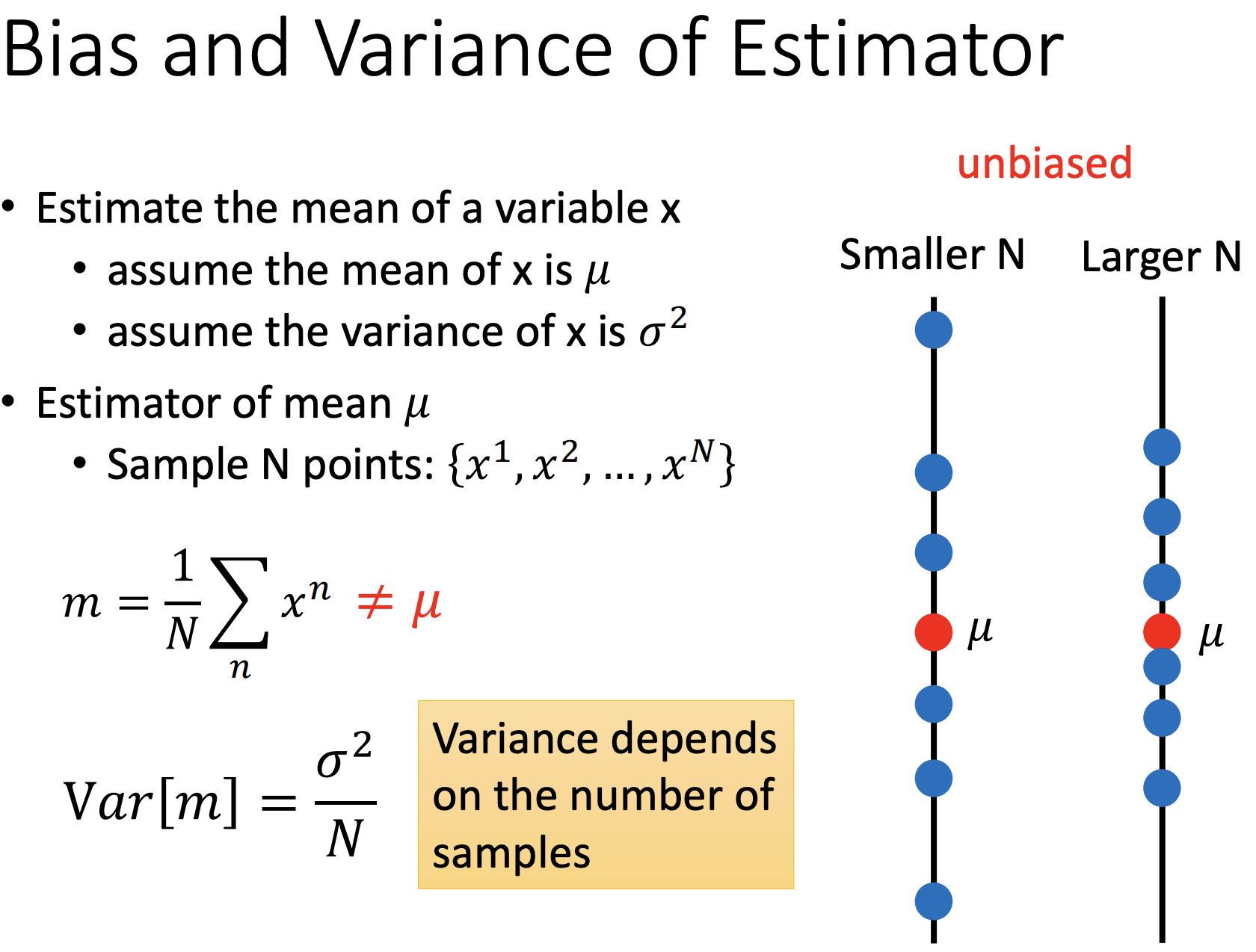
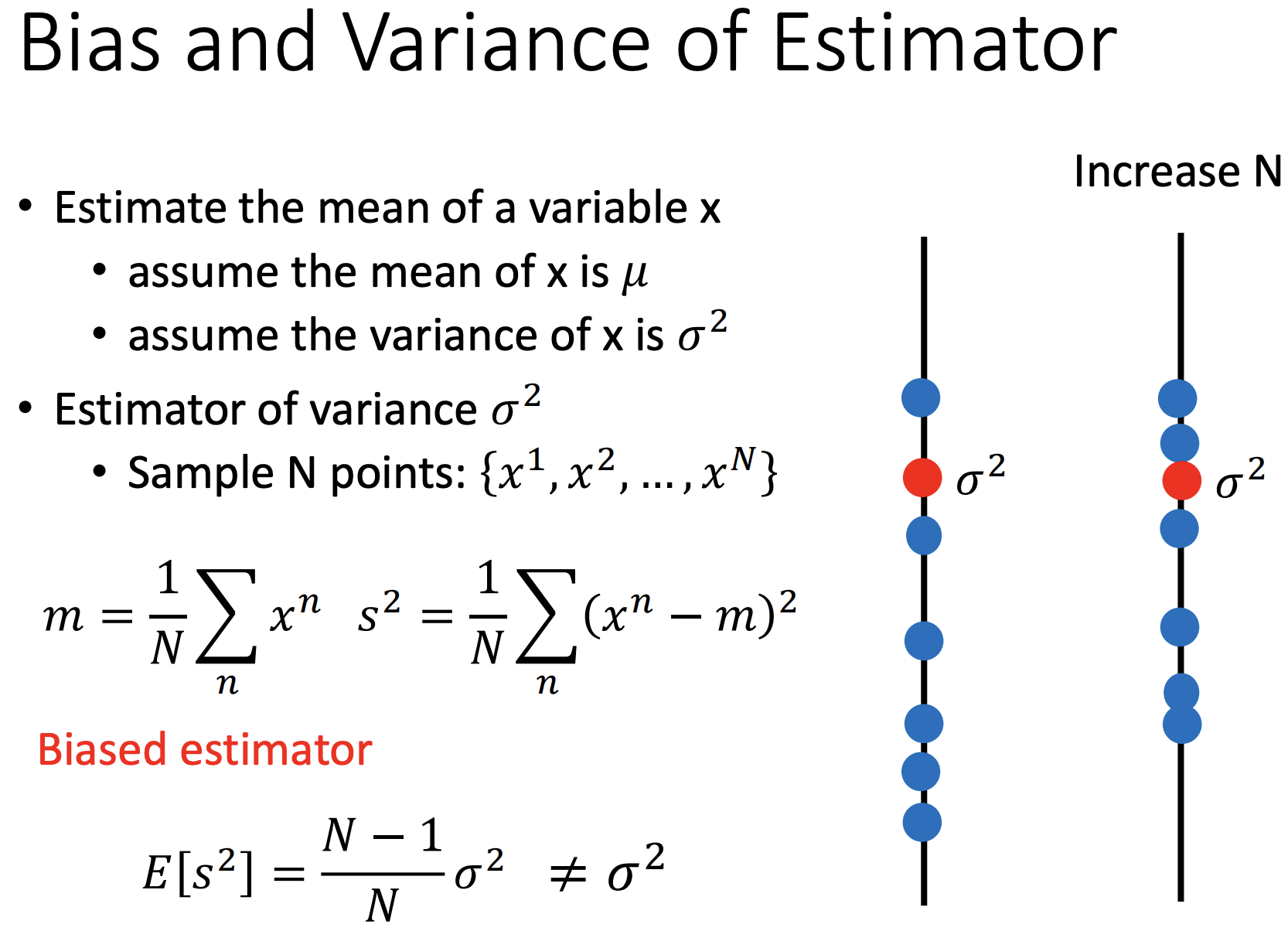
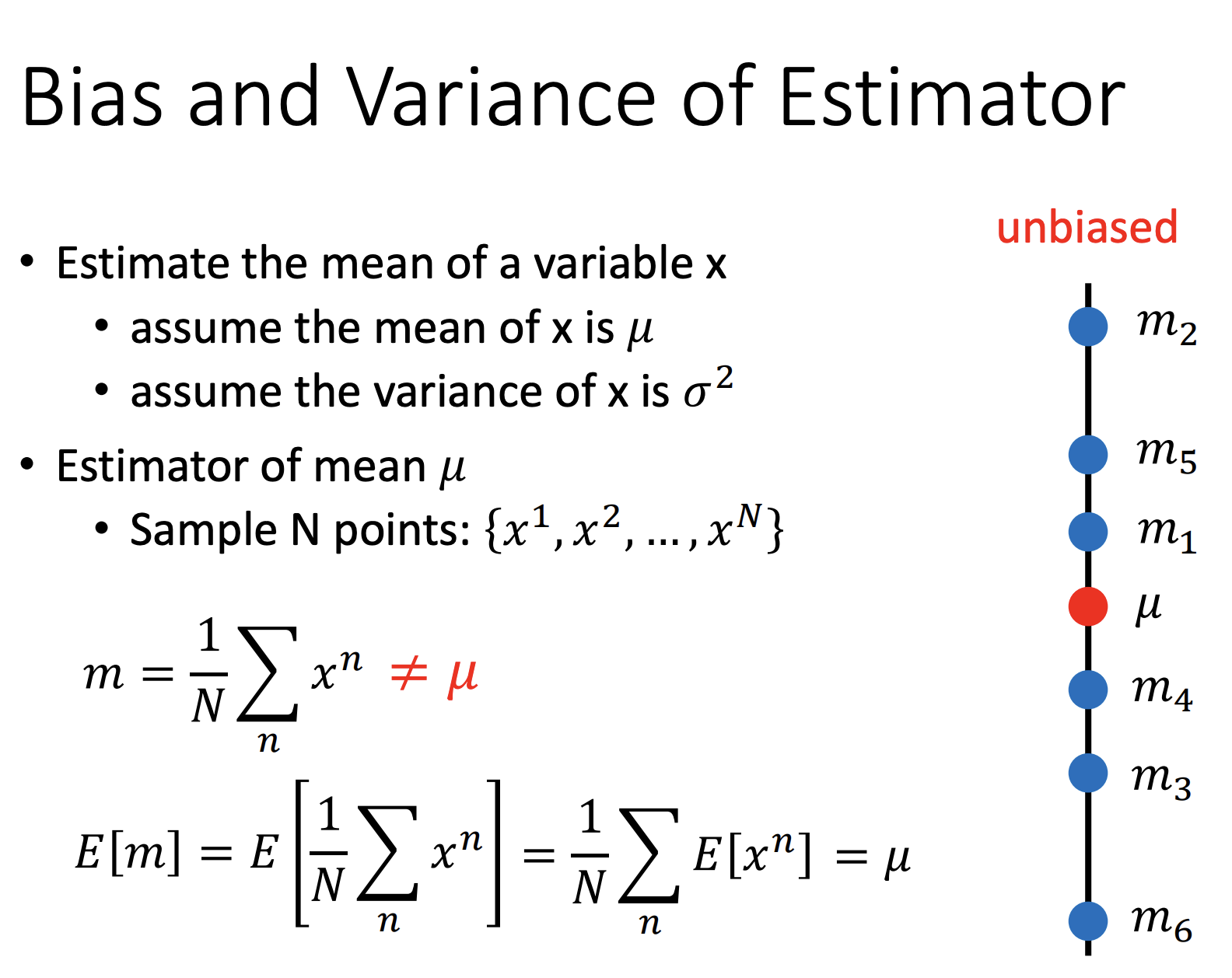 无偏估计:样本的二阶中心矩不是总体方差的无偏估计量,而样本方差是总体方差的无偏估计量.


Classification
Output is a classification (choice).

Structured Learning | Generative Learning
Output is a structured object (image, video, text) Structured Learning can be split into multiple classification problems.
3 Steps to determine function: Set Range, Set Target, Achieve Target.